Good Bets, Bad Runs: How Variance Can Wreck Your Bankroll Even When You're Playing It Right
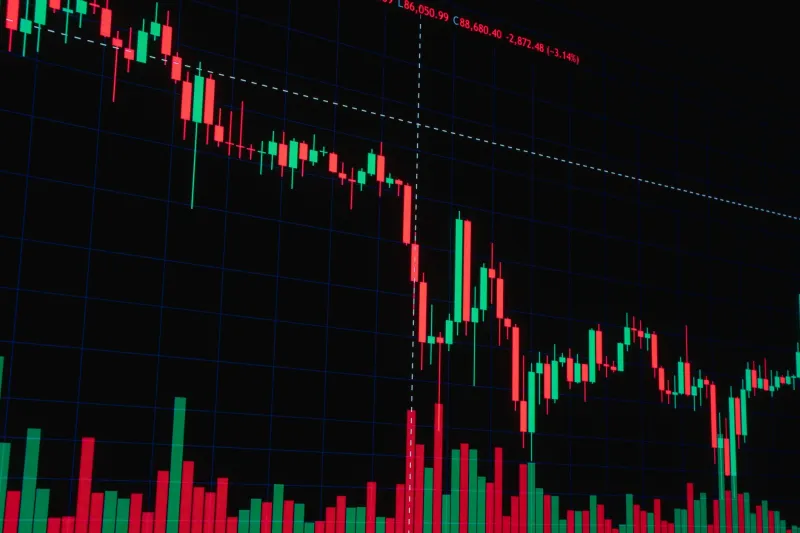
You ran the numbers. The edge was real. The expected value was positive. And then you lost fourteen bets in a row and started questioning everything.
Welcome to variance — the part of betting math that most casual players skip right over, and the part that quietly ends more bankrolls than bad picks ever could.
Here's the uncomfortable truth: a mathematically sound betting strategy doesn't protect you from brutal losing streaks. In fact, if you don't understand variance before you start wagering real money, you're essentially building a house on sand. It might stand for a while. Eventually, it won't.
What Variance Actually Means (In Plain English)
Expected value (EV) tells you what a bet is worth on average over a huge number of trials. If you're consistently finding bets where the true probability of winning is higher than what the odds imply, you have a positive EV strategy. That's the goal.
But here's where people get tripped up: EV is a long-run concept. Variance is what happens in the short run — and "short run" can mean hundreds of bets, not just a few weekends.
Variance, in simple terms, is the spread of outcomes around that expected average. High-variance bets — think underdogs, parlays, long shots — can swing wildly in both directions. Even lower-variance bets on favorites carry enough statistical noise to produce runs that feel impossible.
Standard deviation is how statisticians measure that spread. In betting, it tells you how far your actual results are likely to stray from your expected results over a given sample size. The higher the standard deviation, the wilder the ride — even if your edge is completely legitimate.
A Real-World Example That Might Sting a Little
Let's say you've identified a bet type where you win 54% of the time at -110 odds (standard American football spread betting). That's a genuine edge — most recreational bettors barely clear 50%.
Over 100 bets at flat $100 stakes, your expected profit is around $290. Sounds solid, right?
Now factor in variance. With a standard deviation of roughly $1,000 over that same 100-bet sample, a one-standard-deviation downswing puts you at a $710 loss. A two-standard-deviation bad run — which happens more often than you'd think — means you're staring at a $1,710 deficit despite having a mathematically profitable system.
That's not bad luck. That's statistics doing exactly what statistics do.
Professional bettors and sharp syndicates know this cold. It's why the serious players keep bankrolls that look absurdly large relative to their unit size. They've done the math on how deep a drawdown their strategy can produce — and they've funded accordingly.
How Much Bankroll Do You Actually Need?
This is the question most people never ask before they start betting, and it's arguably the most important one.
A rough starting framework used by experienced bettors: your bankroll should be able to absorb at least 50 to 100 units of loss without forcing you to drop down in stakes or quit entirely. If you're betting $25 units, that's a $1,250 to $2,500 reserve just for variance protection — before you ever think about profit.
For higher-variance bet types, those numbers go up fast. Parlays and futures bets can require 200+ unit bankrolls to ride out the swings inherent to their structure.
Here's a simple way to think about your own variance requirements before you risk a dollar:
- Identify your win rate and average odds. Even a rough estimate works.
- Calculate your standard deviation per bet. For even-money bets, it's close to 1 unit. For longer odds, it's higher.
- Multiply that by the square root of your planned bet volume. This gives you the standard deviation for your sample.
- Plan for two to three standard deviations of downside. That's your realistic worst-case drawdown.
If that number is bigger than your available bankroll, you're underfunded for the strategy you're running. It's that simple — and that brutal.
The Psychological Ambush
Variance doesn't just drain bank accounts. It messes with your head in ways that make everything worse.
When a losing streak hits — even a statistically expected one — the brain starts looking for explanations. You start second-guessing the research. You chase losses to "get back to even." You abandon a winning strategy right before it would have turned around.
This is where variance and psychology team up to really do damage. The math says hold steady. The lizard brain says do something. Most people listen to the lizard.
Some of the sharpest bettors in the country use a simple rule: never evaluate a strategy on fewer than 500 bets. Before that threshold, you don't have a big enough sample to separate skill from noise. If that sounds like a lot, it is — which is exactly why most people never actually validate whether their approach works.
Protecting Yourself From the Variance Trap
Knowing variance exists is half the battle. Here's how to actually manage it:
Flatten your unit size. Betting a consistent percentage of your bankroll — typically 1% to 3% per bet — naturally scales your exposure down during losing runs and up during winning ones. It's one of the most effective variance management tools available to everyday bettors.
Track everything. You can't manage what you don't measure. A spreadsheet with your bets, odds, results, and running bankroll will show you your actual variance over time — and give you early warning if something is genuinely off with your approach.
Separate strategy evaluation from results. Ask yourself: was this a good bet based on the information I had? If yes, a loss is just variance. If no, that's a process problem worth fixing. Don't let outcomes drive your process decisions.
Set a stop-loss, not just a win goal. Most bettors think about how much they want to win. Fewer think about the maximum drawdown they're willing to accept before stepping back and reassessing. Having that number in advance keeps emotional decisions off the table.
The Long Game Is the Only Game
Variance is the price you pay for having an edge in a probabilistic game. You can't eliminate it. You can't wish it away. What you can do is understand it well enough to survive it.
The bettors who build real, lasting success aren't the ones who never lose. They're the ones who expected to lose — sometimes a lot, sometimes for longer than felt fair — and stayed the course anyway because they understood why.
At Fun88 Arena, we're big believers in playing bold. But playing bold doesn't mean ignoring the math. It means understanding it deeply enough that the inevitable rough patches don't knock you out of the game before the edge has time to show up.
Do the variance math before your next deposit. Your future self will thank you.